Tooth loss affects more than just your appearance. Left untreated, gaps in your smile can have lasting consequences for your oral health, bite, and confidence. Dr Clarence Tam, our AACD-accredited cosmetic dentist in Auckland, understands how debilitating tooth loss can be, which is why our team places a dental bridge as a trusted restorative solution to fill the space left behind by missing teeth, helping you eat, speak, and smile with more ease. Whether caused by injury, decay, or gum disease, replacing lost teeth can preserve your oral health and restore your quality of life.
A dental bridge is a fixed restoration used to replace one or more missing teeth in a row. It quite literally “bridges” the gap between healthy teeth or implants. A bridge typically consists of custom-made artificial teeth, connective abutments, and either dental crowns or implants to stabilize the restoration. Dr Tam and our team can discuss every stage of the dental bridge process with you so you can understand what treatment entails and how a bridge may be able to address your concerns.
- Dental Bridges Benefits
- Dental Bridges Candidates
- Types of Dental Bridges
- Dental Bridges Treatment
- Dental Bridges Cost
How Can Dental Bridges Improve My Smile?
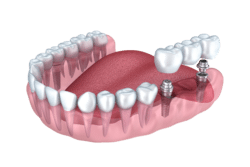 Whether supported by dental crowns or dental implants, a bridge can offer several meaningful benefits. On top of restoring your appearance, a dental bridge provides a non-surgical means of improving chewing and speaking, as well as promoting bite/jaw health. For the right patient, a bridge can:
- Replace consecutive missing teeth without the need for implant surgery
- Strengthen your bite in areas affected by missing teeth
- Fill missing gaps in your smile without invasive treatment
- Prevent the shifting of surrounding teeth
Dental bridges have the benefit of not requiring oral surgery to stay affixed in the mouth, but it’s important to remember that a bridge will not stimulate the jawbone or prevent underlying bone loss like dental implants. If you’re seeking a treatment that can replace lost teeth while still regenerating bone volume, our team can speak with you about implant-supported bridges, implant dentures, or All-on-4® for a more stable, secure solution.
Is a Dental Bridge Right for Me?
A dental bridge can replace teeth with reliable, inconspicuous results for many years, but not everyone is a candidate. Bridges can be ideal for individuals who:
- Are missing multiple teeth in a row
- Have healthy teeth (or dental implants) on either side of the gap to support the bridge
- Maintain good oral hygiene habits and are committed to proper aftercare
- Do not have significant biting issues, active gum disease, or severe tooth decay
- Are looking for a fixed, non-removable alternative to partial dentures
Dental bridges can achieve excellent results alone, but they’re also commonly utilized as part of a larger treatment plan in order to address multiple concerns at once. Since people often don’t experience dental issues like missing teeth in isolation, a Smile Makeover or a full mouth reconstruction can help certain patients achieve their dream smiles faster and more efficiently than undergoing each treatment separately.
Types of Dental Bridges
Bridges can be a trusted and effective option to restore function, maintain your facial shape, and prevent your teeth from shifting out of alignment. There are several types of bridges available, each chosen depending on your specific needs and preferences for the final results.
Traditional Bridges
Standard dental bridges are composed of one or more prosthetic teeth (pontics), which are anchored into place using dental crowns. These crowns are attached to healthy adjunctive teeth (known as “abutment teeth”) and custom-fabricated to seamlessly fill the gap left behind, completing your smile and restoring the strength of your bite without oral surgery. In order to achieve a secure and stable fit for the bridge, the abutment teeth are gently reshaped to accommodate crown placement.
Traditional bridges can be an excellent option when adjacent teeth are strong and healthy enough to support the restoration. They offer a natural look, dependable strength, and the ability to restore normal chewing and speech functions. However, since bridges require modification of the supporting teeth, they may not be the best choice for every patient — particularly for those whose neighbouring teeth are not structurally sound or affected by large restorations. Although traditional bridges can replace teeth while avoiding oral surgery, this technique does not strengthen jawbone volume or help prevent bone loss like implant-supported bridges.
Implant-Supported Bridges
Implant-supported bridges are a modern and secure alternative to traditional bridges that provide superior stability without relying on adjacent natural teeth for support. Instead, dental implants — small titanium posts surgically placed into the jawbone — act as artificial tooth roots to anchor the bridge in place. Unlike traditional bridges, this approach helps preserve bone density in the area of tooth loss and eliminates the need to reshape neighbouring teeth.
Implant-supported bridges are especially beneficial for patients missing multiple consecutive teeth. They can provide exceptional comfort, durability, and long-term oral health benefits by mimicking the function and appearance of natural teeth. They are anchored directly into the jawbone, so implant bridges can feel secure and last for decades with proper care. The procedure typically requires multiple stages, including implant placement, healing, and restoration, but the final result offers unmatched strength and longevity in replacing your missing teeth.
How is Treatment with Dental Bridges Performed?
Treatment with a dental bridge typically begins with a comprehensive consultation and examination. During this visit, your dentist will assess your oral health, take digital X-rays or 3D scans, and determine the most appropriate type of bridge for your needs. If you’re receiving a traditional bridge, the adjacent teeth (known as abutment teeth) will be gently reshaped to accommodate the dental crowns supporting the bridge. For implant-supported bridges, titanium implants are surgically placed into the jawbone and allowed to integrate with the bone over the next few months.
Once the supporting teeth are prepared or the implants are in place, impressions are taken and sent to a dental lab, where your custom bridge is crafted from materials like porcelain, ceramic, or zirconia. In the meantime, a temporary bridge may be placed to protect your smile. When your final bridge is ready, it will be carefully fitted, adjusted, and bonded into place. You’ll receive instructions on caring for your bridge and maintaining good oral hygiene. Follow-up visits are scheduled to ensure the bridge remains secure, functional, and comfortable.
How Much Do Dental Bridges Cost?
The cost of a dental bridge varies based on several factors, including the type of bridge, the number of teeth that require replacement, the materials used, and whether additional treatments — such as implants, crowns, or gum disease therapy — are necessary prior to bridge placement. Implant-supported bridges tend to be more costly due to the surgical and restorative components. A detailed cost estimate will be provided during your consultation and tailored to your specific treatment plan and goals. Our office team at Tam Dental Group would be happy to discuss dental financing options with you during your appointment if desired.
Dr Clarence Tam and our multi-talented dental team can identify a stunning and highly effective restoration to replace your missing teeth and rebuild your smile. Contact Tam Dental Group today for more information about our cosmetic, restorative, and family dentistry services, or if you’re ready to schedule an appointment.